Key Takeaways:
- Restricted access to important systems and regular software patching help to close security vulnerabilities.
- Maintain and test your incident response plan and routinely train staff members how to recognize cyberattacks.
- There is no single software solution that you can buy to address the FTC Safeguards requirements
Webinar
Protecting Auto Dealers from Cyber Threats
Cybersecurity is important for all businesses including auto dealers. There are a lot more risks now that we use digital tools, third-party vendors, and do more business online. The Federal Trade Commission has recognized this need and has actually issued a mandate for Auto Dealers among other businesses with similar profiles.
What can car dealerships do to keep themselves safe? Let’s go over the four most important cybersecurity areas that any automobile dealer should pay attention to. We’ll also talk about some tips that are specific to the industry that can help you keep your business safe. It’s important to remember that the below activities cannot be accomplished through buying a singular software package or template policy stack.
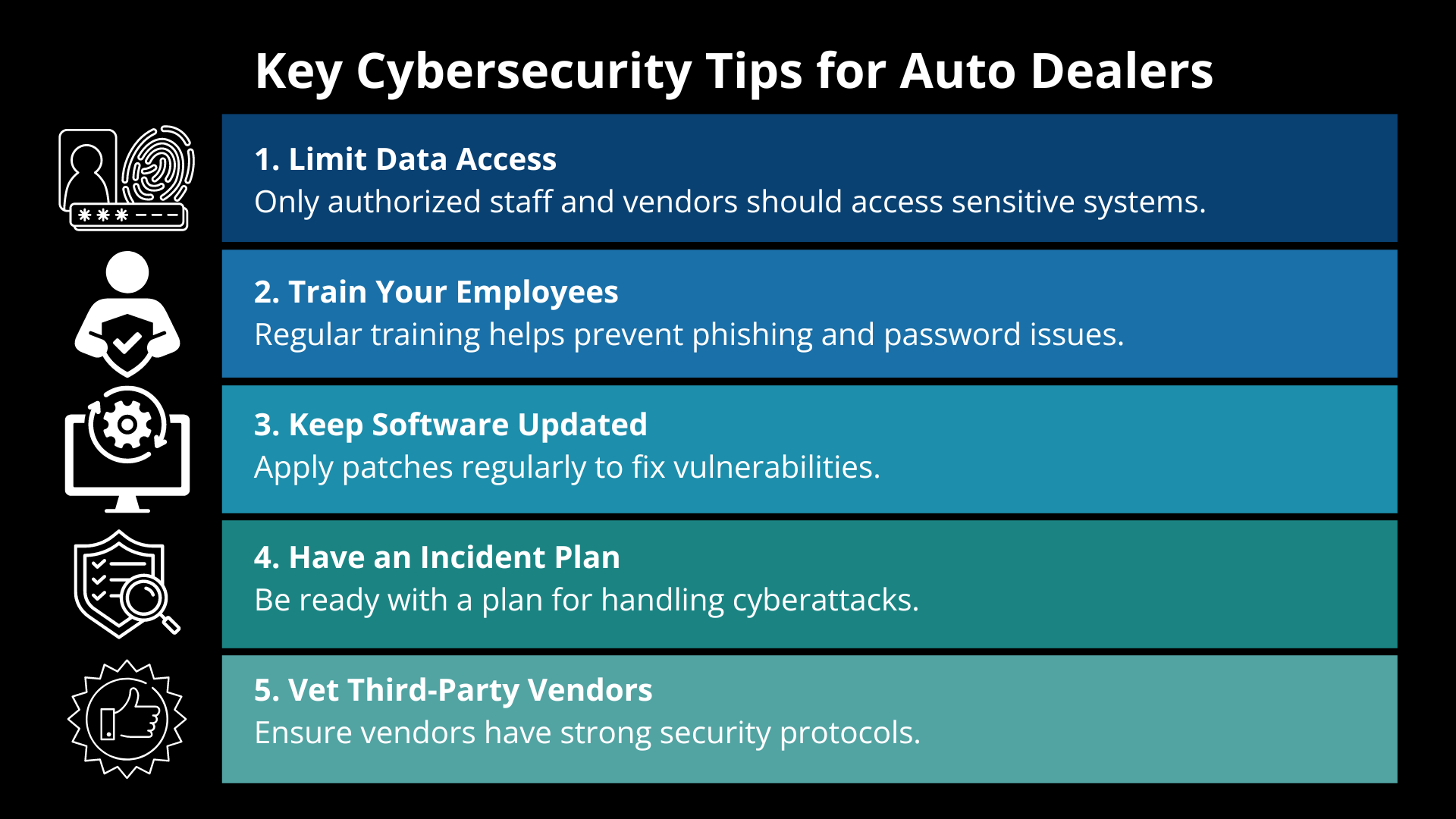
1. Control Access: Only the Right People Should Have Access
You’ve probably heard this before: control access. But what does that really mean for auto dealers?
Simply put, not everyone in your dealership needs access to every system or piece of data. Access to specific information should be limited to employees who need it for their work, and the same applies to any third-party vendors you depend on. It’s important to make sure that your sales team, finance department, and any outside IT support only have access to the systems they really need.
This “least privilege” approach minimizes the number of people who can accidentally (or intentionally) misuse sensitive data or systems, thereby reducing the chance of a cybersecurity breach.
2. Employee Training: Your Team Is Your First Line of Defense
Locks and keys are useful, but they’re not the only thing that’s needed. Most cyberattacks, including targeted attacks, are caused by mistakes made by people, like when workers click on bad links or download files that aren’t safe.
Auto sellers should train their employees on the best ways to keep their data safe. They should know how to spot phishing emails, know what can happen when passwords aren’t strong, and be aware of any odd behavior. It can be straightforward, but it needs to be reliable. Consistent practice and gentle nudges can truly change everything.
One key point: don’t overlook the basics. In many cases, hackers aren’t breaking into highly secure systems through complex methods—they’re getting in because someone clicked on a link they shouldn’t have. Helping your team understand what not to do is as important as teaching them what they should be doing.
3. Patch Vulnerabilities: Keeping Your Software Updated
Dealerships have many moving elements, literally and figuratively. Update your dealership’s sales, customer, and inventory software regularly. Why? Every piece of software will have its weaknesses, and hackers are always on the lookout for ways to take advantage of them.
Fortunately, many vendors provide updates to address these issues once they are discovered. What’s the challenge? Make sure you actually apply these patches. Whether it’s Microsoft updates or software specific to the auto industry, you need a digital asset management routine for regular updates and patches. If your systems are outdated, you’re essentially leaving the front door wide open for potential cyber criminals.
Consider it like this: just as a car requires regular care to function well, your dealership’s software needs updates and patches to remain secure.
4. Have a Response Plan: Prepare for the Worst
Things might not go as planned at any time, no matter how well our security is set up. Your response could make or break your business.
So, it’s very important to have an incident response plan for how to handle an event. The FTC’s Safeguards Rule requires that someone manage the information security program and protect customer data. If a hack or breach does happen, do you know exactly what to do? Who do you call? What should you turn off? What is the best way to let vendors or customers know that their info has been stolen?
Preparation is important here. A cybersecurity breach can cause confusion, long periods of inactivity, and damage the trust your customers have in you if there’s no plan in place. Having a plan helps you react swiftly, reduce harm, and restore your dealership as quickly as you can.
One thing that often gets missed is downtime. Many people think that losing customer data is the biggest risk in a breach, but for auto dealers, downtime can be just as harmful—if not worse.
Imagine not being able to access your sales systems during a busy holiday weekend. If you don’t make any sales, it can hurt your dealership and cost you money. For tough times, you can be ready with a good plan for how to handle them. It also helps your company stay strong when things go wrong.
Unique Cybersecurity Challenges for Auto Dealers
For accounting tasks or cloud-based sales monitoring, auto dealers often depend on third-party software. These tools may introduce new risks even if they might increase the efficiency of your dealership.
For example, you might not control all the security features of the software you’re using. A breach on the vendor’s side could impact your business, even if your internal systems are secure.
It’s important to take the time to check your vendors and make sure they have good cybersecurity measures in place. Inquire about their approach to data management, the frequency of their security updates, and the details of their incident response plans.
Like I mentioned before, losing vital tools is hard, especially when sales are increasing. Downtime from ransomware or system issues can cost more than money. It impacts how people see you and how you interact with customers. A security awareness program and effective security tools can reduce these challenges.
Being Proactive Saves Time and Money
We’ve talked about how important it is to stop hackers. Waiting until something breaks to fix it may cost more than stopping them now.
Car dealers must monitor access restrictions, train staff on basic cybersecurity, distribute updates, and have a sound security plan. Your firm may save money and maintain its reputation by being proactive.
Cybersecurity needs our attention. Auto dealerships are easy targets for hackers because they rely a lot on digital technology.
To secure your dealership, prioritize access control, staff training, software updates, and a response strategy. These actions prevent downtime, preserve client data, and keep systems working smoothly during attacks.
LBMC’s cybersecurity team can assist. They’ll develop a robust defense and provide you peace of mind with tailored solutions to secure your dealership.