What Is the CIA Triad in Information Security?
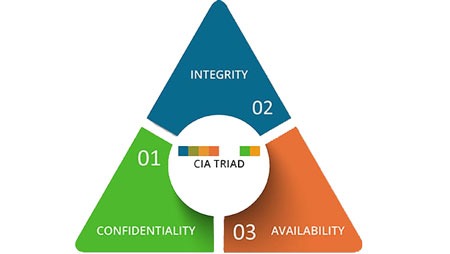
The CIA triad is a model in information security that includes three core principles: confidentiality, integrity, and availability. These principles guide how organizations protect data from unauthorized access, ensure accuracy, and maintain reliable access to systems and information.
The CIA triad in information security — confidentiality, integrity, and availability — represents the core principles organizations use to protect data. Every security program and control should support one or more of these tenets, helping organizations reduce risk, maintain trust, and ensure systems function as intended.
What Is Confidentiality in Information Security?
How Confidentiality Protects Sensitive Data
Confidentiality measures are an essential component of data security, as they safeguard sensitive information against unauthorized access or disclosure. The goal is to ensure that data is only accessible to individuals who need it to perform their job responsibilities.
Common Confidentiality Controls
Common confidentiality controls include:
- Role-based access control (RBAC)
- Encryption
- Multi-factor authentication (MFA)
- Data classification policies
What Is Integrity in Information Security?
Why Data Integrity Matters
Integrity focuses on preventing unauthorized modifications, deletions, or additions to data. It ensures that data remains accurate, complete, and trustworthy for decision-making.
Controls That Support Data Integrity
Common integrity controls include:
- Input validation
- Hashing and checksums
- Version control
- Audit logs and monitoring
By maintaining integrity, organizations can rely on their data to drive accurate business decisions.
What Is Availability in Information Security?
Ensuring Systems and Data Are Accessible
Availability ensures that data and systems are accessible when users need them. This includes maintaining reliable infrastructure and minimizing downtime.
Technologies That Support Availability
Common availability measures include:
- Data backups
- Disaster recovery planning
- Redundant systems
- Load balancing
Maintaining availability helps ensure business continuity and operational efficiency.
How the CIA Triad Works Together
While confidentiality, integrity, and availability are distinct, they are closely connected and often impact one another.
For example, strict access controls that improve confidentiality may reduce availability if users struggle to access needed data. Similarly, monitoring systems that support integrity may require broader data access, which can introduce confidentiality risks.
Effective information security requires balancing all three principles based on organizational risk.
Example of the CIA Triad in Practice
Effectively executing all three tenets creates a strong information security outcome.
Consider this example: An organization creates sensitive business data. Only authorized employees should access it—this reflects confidentiality.
When employees need the data, it must be available and accessible—this reflects availability.
Finally, the data must remain accurate and unaltered to support business decisions—this reflects integrity.
Together, these principles ensure data is secure, usable, and trustworthy.
How to Strengthen Your Information Security Program
To apply the CIA triad effectively, organizations need a comprehensive approach that includes:
- Access controls and encryption for confidentiality
- Monitoring and validation for integrity
- Backups and recovery planning for availability
Training employees and establishing clear policies also play a critical role in supporting all three principles.
Strengthen Your Security with Risk Assessments
Understanding the CIA triad is only the starting point. Applying these principles effectively requires visibility into your current risks, controls, and gaps.
LBMC helps organizations evaluate their security posture through risk assessments and current state assessments, providing clear insight into where controls align—and where improvements are needed.
Learn more about our Risk Assessments / Current State Assessments.
CIA Triad Information Security FAQs
What is the CIA triad in information security?
The CIA triad refers to confidentiality, integrity, and availability—three core principles that guide how organizations protect information.
Why is confidentiality important for organizations?
Confidentiality protects sensitive data from unauthorized access, reducing the risk of breaches and compliance issues.
How do we maintain the integrity of our data?
Integrity is maintained through controls like validation, monitoring, and audit logs that prevent or detect unauthorized changes.
What does availability mean in cybersecurity?
Availability ensures systems and data are accessible when needed, supported by backups, redundancy, and disaster recovery.
Can improving one part of the CIA triad hurt another?
Yes. Strong confidentiality controls can limit access, while monitoring for integrity may expose sensitive data. Balance is key.
What are some practical steps to improve the CIA triad?
Use access controls, encryption, monitoring, backups, and employee training to support all three principles.